A Model Collection
B.15 Modelmaking Workshop and Figshare
The Manchester School of Architecture
The Manchester School of Architecture (MSA) is delivered through a partnership between The University of Manchester and Manchester Metropolitan University. With more than a century of teaching and research, it brings together over 100 academic staff and around 1,000 students from more than 80 countries, with an international reputation for design excellence and research-led teaching.
A defining feature of MSA's approach is its emphasis on experimentation and making. Students explore architectural ideas not only through drawings and digital tools, but through physical construction and modelmaking 鈥� a combination of creative practice and critical enquiry that sits at the heart of the school's culture.
The B.15 Modelmaking Workshop
Founded in 1970, the B.15 Modelmaking Workshop has supported architectural education at MSA for more than fifty years, providing the tools, expertise, and space to develop architectural ideas through physical models.
At its core is the principle of learning through making. Constructing models helps translate abstract design ideas into tangible objects, bridging the gap between theory and practice. In an era shaped by digital design tools, the workshop also raises an important question: what role does hand-crafted modelmaking continue to play in architectural thinking?
Over the decades, B.15 has produced detailed and often award-winning models, exhibited internationally at events including the Venice Architecture Biennale and the Henning Larsen Awards. Since 2016, the workshop's Architypes exhibition has showcased selected models illustrating key architectural ideas.
Despite these successes, only a small portion of the collection has ever been publicly visible. Hundreds of models created through teaching and research have remained in storage.
The challenge
Architectural models are inherently difficult to archive. They are often large, fragile, and constructed from materials that deteriorate over time. Unlike drawings or digital files, they are rarely preserved systematically within institutional collections.
At B.15, this meant a substantial body of work existed but was largely inaccessible - difficult to preserve and almost impossible to reference or cite in research and teaching. The challenge was therefore not only one of storage, but of accessibility: making these physical artefacts discoverable, reusable, and citable within a digital research environment.
The Project: "A Model Collection" (2023鈥�2025)
To address this, the B.15 Workshop collaborated with the University鈥檚 Office for Open Research team and the on a project focused on transforming the physical models into high-quality digital resources that could be openly shared and preserved. The institutional repository platform was selected to host this dedicated digital collection.
Each partner contributed distinct expertise. The B.15 team provided technical knowledge of the models and workshop practices; the Office for Open Research supported metadata development, repository workflows, and Open Access publication; the Research Lifecycle Programme provided coordination and project support. Together, they enabled the creation of a sustainable digital archive.
Developing the digital workflow
A major part of the project involved designing and documenting a digitisation workflow. The team established a photography setup capable of producing high-quality images and introduced 3D scanning using an Artec Space Spider scanner. Workshop staff were trained in these techniques, often from scratch, and documentation was developed to ensure the workflow could be sustained by future staff and students.
Practical challenges abounded. Complex model geometries are difficult for 3D scanners to capture accurately; photography required careful lighting and background management; and large or fragile models had to be handled safely within shared teaching spaces.
A cataloguing process using a central spreadsheet tracked key metadata: model descriptions; authorship; materials; provenance; and associated images, ensuring consistency across records and simplifying publication to the repository.
Outputs and tools
The project鈥檚 primary open output is the , where each model is represented by an individual record containing high-resolution photographs, descriptive metadata, and where possible an interactive 3D model. Records are searchable and citable, and provide usage metrics such as views and downloads.
The team also developed a using , offering step-by-step instructions for photographing, scanning, and documenting architectural models so others can reproduce or adapt the process for their own collections.
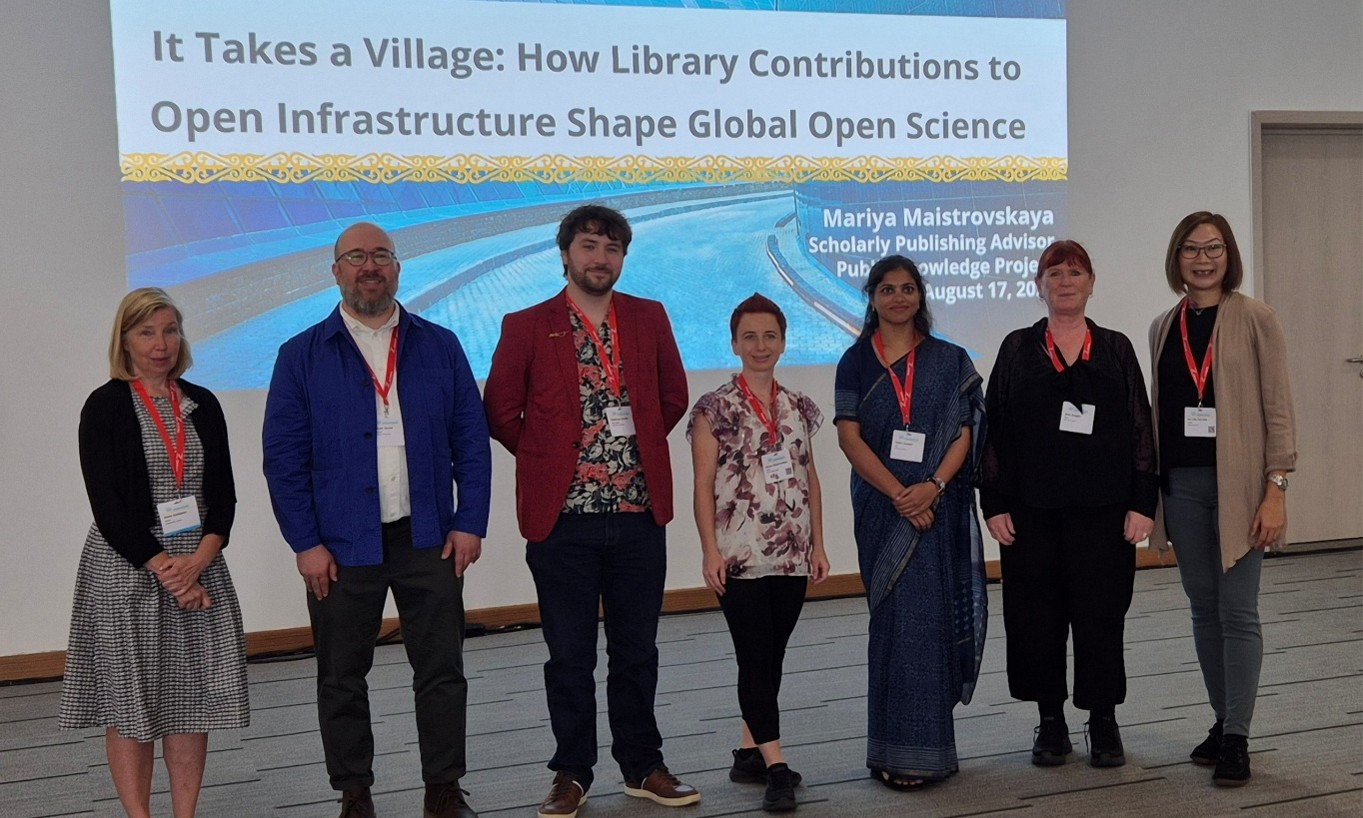
In July 2025 these thousands of photographs and multiple 3D scans were formally published as open digital resources. In my role as Project Lead and Strategic Lead for Research Data Management, I co-presented a paper on the project with Project Coordinator Matt McGill at the . Held during August 2025 in Astana, Kazakhstan, the conference allowed us to share the outputs and insights from the project with a global audience. In November 2025 a formal launch event was also held in Manchester, including an exhibition of models at the Manchester Technology Centre and an evening event with tours of the B.15 workshop.
Benefits and impact
The project has created benefits across several communities.
For the University Library, it demonstrates how a research data repository can support humanities and creative disciplines, while strengthening collaboration between academic, technical, and library teams and contributing to growing activity in digital heritage and research data innovation.
For the B.15 Workshop, the project has significantly increased the visibility of its collection and established a standardised workflow for ongoing cataloguing and digitisation.
Students benefit by learning how to publish research outputs using open platforms such as and . Where physical models cannot be stored long term, digital capture preserves their work and makes it discoverable, and in some cases students can obtain citable DOIs for their creative outputs.
Beyond the university, the project offers a reusable framework for other disciplines working with physical collections, including archaeology, design, and museum studies. Open Access publication also extends the collection's reach to the wider public, with digital models enabling 3D printing, virtual exhibitions, and incorporation into VR platforms.
Key takeaway
A Model Collection demonstrates how traditional craftsmanship, research data management, and Open Access infrastructure can work together to preserve and share physical heritage. By transforming architectural models into openly accessible digital resources, the project safeguards an important collection while providing a practical framework that other disciplines can follow.
Explore the resources
- Collection:
- Workflow guide (available in English, German, French, Spanish, Japanese, and Chinese):
Bill Ayres, Strategic Lead for Research Data Management